
REGAIN
YOUR EDGE
You built the career, the family, the life. But somewhere along the way, your body started working against you — and you can feel it in everything.
The Silent Decline is stealing your drive, your sharpness, and your vitality. After 30, your testosterone drops every single year — and stress, poor sleep, and modern life accelerate the fall. We put the science behind this crisis — and the natural path to reversing it — into a free handbook so you can see exactly what is happening and what to do about it.
GET THE FREE HANDBOOKTHE REALITY
The Silent Decline
There is a name for what is eroding your edge. It is not aging. It is not weakness. It is The Silent Decline — a biological process where falling testosterone, rising cortisol, and chronic stress compound year after year until the man in the mirror is someone you barely recognize.
The amount of testosterone your body loses every year after 30. By 45, you could be operating at 85% of your peak — or less.
Researchers found that modern men have approximately 35% lower testosterone than their grandfathers at the same age. Environment and lifestyle are accelerating the decline.1
The testosterone drop caused by just one week of poor sleep. Chronic stress and sleep deprivation measurably destroy your hormonal foundation.2
THE SYSTEM
Your Hormonal Operating System
Testosterone is not just about the gym or the bedroom. It is the master signal that regulates your drive, your confidence, your body composition, and your mental clarity. When it declines, everything declines with it.
Physical Performance
TESTOSTERONE & YOUR BODY
Muscle mass and body composition — testosterone directly drives protein synthesis. When levels drop, muscle fades and fat accumulates — especially around the midsection.
Energy and recovery — low testosterone means your body cannot rebuild efficiently. The fatigue is not laziness — it is hormonal depletion.
Libido and sexual performance — testosterone is the primary driver. When it drops, desire fades and performance suffers — creating a cycle of frustration and avoidance.
Mental & Emotional Edge
TESTOSTERONE & YOUR MIND
Confidence and decisiveness — testosterone fuels the quiet authority that once came naturally. Low levels breed hesitation, self-doubt, and second-guessing.
Stress resilience — cortisol and testosterone compete for the same raw materials. High stress = high cortisol = suppressed testosterone. The cycle feeds itself.
Cognitive sharpness — brain fog, deteriorating memory, declining focus. These are not signs of aging — they are signs of hormonal imbalance.7
Your body's hormonal system is interconnected and self-regulating. The handbook explains exactly how it works — and where the breakdown happens.
THE INVISIBLE TOLL
The Cost of Doing Nothing
The Silent Decline does not announce itself. It erodes you gradually — until one day you realize the man you used to be is gone.
THE FADING DRIVE
You used to attack every morning with purpose. Now you are dragging yourself through the day on caffeine and willpower. The fire that built your career is dimming.
THE EXPANDING WAISTLINE
You are training the same, eating the same — but your body is changing. Muscle fading. Belly growing. Your metabolism is not betraying you. Your hormones are.
THE BRAIN FOG
Decisions that used to come instantly now require effort. You are forgetting names, losing threads mid-conversation. The sharpness that made you successful is blunting.
THE SHORT FUSE
Snapping at your wife. Losing patience with your kids. The irritability is not personality — it is biology. Low testosterone disrupts emotional regulation at the neurological level.
THE TRT TEMPTATION
You have Googled testosterone replacement therapy. Maybe even had the conversation with your doctor. But you know once you start, your body stops producing its own. It is a one-way door.
THE SLOW SURRENDER
Accepting "this is just what getting older feels like." Lowering the bar for yourself. Every month you ignore the root cause, the gap between who you are and who you could be grows wider.
THE FOUNDATION
The Truth About Your Testosterone
Your body is not broken. It is responding to signals — and right now, it is getting all the wrong ones.
When you are chronically stressed, your body prioritizes survival over performance. Cortisol and testosterone are built from the same precursors. High stress = high cortisol = suppressed testosterone production. It is not a theory — it is basic endocrine biochemistry.
You do not need TRT. You do not need another biohacking protocol from a podcast. You need to understand how your body's hormonal system actually works — the hypothalamic-pituitary-gonadal axis, the cortisol competition, the role of sleep and nutrition — so you can stop fighting biology and start working with it. The men who reverse The Silent Decline do not do it with injections. They do it with knowledge, lifestyle precision, and targeted natural support.
will reverse the decline. Only understanding the science — and acting on it — changes the trajectory.
ASSESS YOUR RISK
What is Your Testosterone Risk?
Answer 5 quick questions to estimate where you stand — and get a personalized action plan.
YOUR RESULTS
Your Testosterone Risk Score
Based on your answers, here is where your hormonal foundation stands.
THE TRAJECTORY
Hoping Will Not Fix This
The Silent Decline is progressive. Without intervention, the trajectory only goes one direction.
Slower recovery from workouts. A little less drive in the morning. You chalk it up to a busy quarter and push harder.
The belly that will not budge. The brain fog that was not there before. Your wife says you seem "different." You blame the workload.
You are Googling "low testosterone symptoms" at 2 AM. The drive, the confidence, the physical edge — it is measurably different. TRT clinics start showing up in your feed.
You can keep hoping it reverses on its own. Or you can understand the science, take control, and rebuild your hormonal foundation — naturally.
Stop accepting the decline as inevitable. It is not aging — it is a correctable hormonal imbalance that modern life accelerates.
Fix the root cause, not the symptoms. Before you inject synthetic testosterone, understand why your body stopped producing enough of its own.
Reclaim your edge — naturally. Targeted nutrition, lifestyle precision, and evidence-based natural compounds can support your body's own testosterone production.
No shortcuts. No injections. No dependency. The goal is biological sovereignty — your body producing what it needs, on its own terms.
Demand the science. No bro-science. No podcast hype. Peer-reviewed research and proven natural compounds — that is what this handbook delivers.
WHAT IS IN THE HANDBOOK
This Is Not Opinion — It Is Endocrine Science
The free Masculine Man's Handbook breaks down the peer-reviewed research on testosterone production, cortisol competition, and hormonal optimization — so you can see the science for yourself and make informed decisions about your body.
Evidence-Based Science
The handbook walks you through the published research on testosterone synthesis, the hypothalamic-pituitary-gonadal axis, and the biological mechanisms behind age-related decline — so you understand what is actually happening in your body.
Actionable, Not Academic
We have distilled the endocrine science into a clear, practical framework. You will understand the role of sleep, stress, nutrition, and specific natural compounds — and exactly what to do about each one.
Built for Men Who Want Control
This is not generic wellness advice. The handbook is specifically designed for high-performing men who refuse to accept decline as inevitable — and want a natural, evidence-based path to hormonal sovereignty.
THE PATH FORWARD
Your 3-Step Restoration
Reversing The Silent Decline starts with understanding the science. Here is the path from decline to reclaimed vitality.
Understand the Science
Download the Masculine Man's Handbook and learn exactly how testosterone production works, why it declines, and the role cortisol, sleep, and lifestyle play in suppressing your body's natural output — the biology behind the crisis.
Optimize Your Foundation
Apply the research-backed strategies to support your hormonal system. Sleep architecture, stress management, nutrition, and targeted natural compounds work together to create the conditions your body needs to produce testosterone at optimal levels.
Reclaim Your Edge
Show up as the driven, sharp, physically vital man you know you can be. Not artificially enhanced — naturally restored. The kind of quiet, unshakeable confidence that comes from a body operating at full capacity.
THE TRANSFORMATION
The Man on the Other Side
This is not anti-aging. This is reclaiming what was always yours. When your hormonal foundation is strong, everything built on top of it — career, family, identity — transforms.
You wake up with energy and purpose — no alarm, no caffeine crutch
Your body responds to training again — muscle builds, fat burns, recovery accelerates
The brain fog lifts — decisions come faster, focus sharpens, memory returns
Your drive and confidence return — not forced, not performed, genuinely restored
Your wife notices the change before you do — because presence is felt, not announced
You are building the legacy you envisioned — with the biological foundation to sustain it for decades
THE SCIENCE
Natural Compounds That Support Your Testosterone
Research has identified specific natural compounds that support your body's own testosterone production — without the dependency risks of synthetic replacement. Here is what the science says.
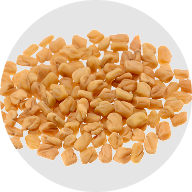
Fenugreek Extract
Clinically studied for its ability to support healthy testosterone levels and sexual function. Research shows fenugreek may help inhibit enzymes that convert testosterone to estrogen — keeping more of your natural testosterone bioavailable.3
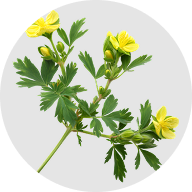
Tribulus Terrestris
Used for centuries in traditional medicine for male vitality. Modern research suggests Tribulus supports luteinizing hormone (LH) signaling — the pituitary hormone that directly stimulates testosterone production in the testes.4
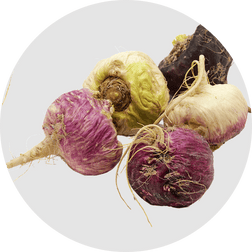
Maca Root
An adaptogenic root studied for its effects on energy, endurance, and sexual function. Research indicates maca supports hormonal balance without directly altering testosterone levels — working instead through the hypothalamic-pituitary axis.5
Learn more about how these natural compounds work together in the free Masculine Man's Handbook.
*These statements have not been evaluated by the Food and Drug Administration. This information is educational and not intended to diagnose, treat, cure, or prevent any disease.
FREE DOWNLOAD
The Science Behind Reclaiming Your Testosterone
The research. The biology. The natural path forward. Everything you need to understand why your body is working against you — and how to take it back.
Understand the biology. Then decide your next move.
GET THE FREE HANDBOOK
GET INSTANT ACCESS
Download the Masculine Man's Handbook
Enter your email and we will send you the full He LABS Masculine Man's Handbook — the science behind reclaiming your testosterone, delivered straight to your inbox.
REFERENCES & SOURCES
1. Gomula, A. & Rabijewski, M. (2010). Testosterone deficiency syndrome — diagnosis and treatment based on age-specific testosterone concentration standards. Seksuologia Polska, 8(1), 1-16.
2. Leproult, R. & Van Cauter, E. (2011). Effect of 1 Week of Sleep Restriction on Testosterone Levels. JAMA, 305(21).
3. Wankhede, S. et al. (2016). Examining the effect of fenugreek extract supplementation on the testosterone profile of resistance-trained males. Journal of the International Society of Sports Nutrition.
4. Qureshi, A. et al. (2014). A systematic review on the herbal extract Tribulus terrestris and the roots of its putative aphrodisiac and performance enhancing effect. Journal of Dietary Supplements.
5. Gonzales, G.F. et al. (2002). Effect of Lepidium meyenii (MACA) on sexual desire. Andrologia, 34(6).
6. Travison, T.G. et al. (2007). A Population-Level Decline in Serum Testosterone Levels in American Men. Journal of Clinical Endocrinology & Metabolism, 92(1).
7. Tyagi, V. et al. (2017). Revisiting the role of testosterone: Are we missing something? Reviews in Urology, 19(1).